Ocala, FL · Garage Door Service
Belleview homes built around 1983 still run original steel rollers. Ocala Garage Door Co explains what wears out, what it costs to fix, and what doesn't.
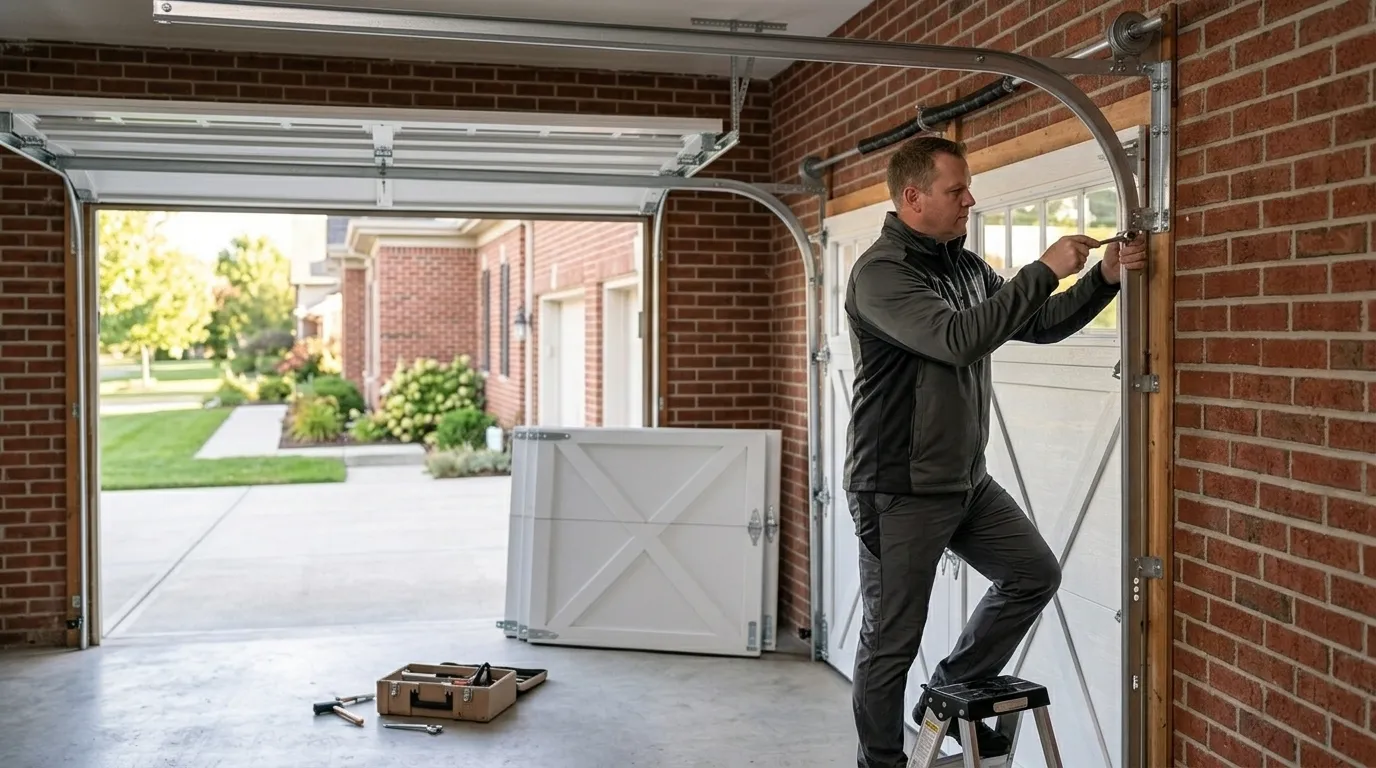
A straight roller swap on a door with steel rollers and no bent track usually runs under an hour once the truck is on-site. Belleview's housing stock is tight around one build era - most of it went up in the early-to-mid 1980s - so a tech pulling up to a job here is almost always looking at the same generation of hardware: 10 rollers, steel, riding in a track that was never designed for anything else. That consistency actually speeds the job up, because there's less guessing about what's behind the panel.
What adds time isn't the roller itself, it's what the roller has been doing to the track for the last forty years. If the rollers have worn a lip into the track rail, or the door has been dragging instead of rolling for a while, the tech has to true up or replace a section of track before the new rollers go in. That's a different job than a straight swap, and it's common on doors this age because nobody replaces a roller until it's already grinding.
We travel to Belleview from Ocala, about 10 miles out, so the job itself is quick - the drive is the only real lead time.
The complication in Belleview isn't weather - the mild temperate climate here doesn't put the same freeze-thaw stress on hardware that colder regions deal with, so rust-jammed rollers from ice are not the issue. The complication is age plus neglect. A door built in 1983 that's had its rollers replaced even once is the exception, not the rule. Most of what a tech finds on these doors is the original steel roller and the original stem, both worn oval instead of round, both still technically turning.
When a roller's been worn that long, the bracket holding it can be worn too, and on some of the older track systems from this era the bracket isn't a standard bolt-pattern - it takes a little more time to source a matching part or adapt a current one. That's the honest limitation: if the track hardware itself is original and warped rather than just worn, a roller swap alone won't fix the noise or the binding, and pushing rollers into bad track just wears the new ones out fast. In that case the fix is a track section, not another roller.
The other complication is cable tension shifting once new rollers seat differently in old track - a five-minute adjustment, but one that gets skipped if the job is rushed.
Rollers look like the easiest DIY repair on a garage door, and on a newer door they mostly are. On a door built around 1983, they're not, mainly because of what's holding the roller in, not the roller itself. The bottom fixture on many doors this age is riveted, not bolted, and pulling it without the door under control can drop a panel or snap a cable under tension.
The other issue is you won't know if the track is worn until the old roller's out, and by then you're mid-job with a door that won't close. Nylon rollers are cheap and swap-in fine on straight track. Steel rollers on track that's developed a lip from forty years of the same wear pattern need the track addressed at the same time, and that's not a one-person, one-afternoon fix with hand tools.
If the door only squeaks and rolls smooth, a homeowner can often get another year out of it with the right lubricant on the existing rollers. If it's binding, jumping, or the door drags at the same spot every time, that's track wear talking, and it's worth having someone look at the whole assembly rather than just swapping the part that's making noise.
We don't have a set price to quote here without seeing the door - what a roller job costs depends on whether it's a straight nylon-for-steel swap or whether the original track from the 1983-era build needs correcting too. Belleview households run a median income a bit above the wider service area's average, but that doesn't change what parts cost; it just means the calculus on repair-versus-replace tends to land on repair more often here, since a full roller and track correction is usually a fraction of a new door.
What we can say is that the age consistency in Belleview's housing works in the homeowner's favor on cost. Because so many doors here share the same era of hardware, a tech isn't guessing at what parts to bring - which cuts down on return trips for a part that wasn't on the truck. That's less true in mixed-age neighborhoods where every third house has a different system.
For a full look at pricing structure and what drives it, see our Ocala roller replacement page. For anything beyond the roller itself - opener, panel, spring - see our Belleview repair page.
If your house was built in the early-to-mid 1980s, which describes most of Belleview's housing stock, there's a good chance the answer is yes. Original steel rollers on original track is the most common setup we find on service calls out here, simply because nobody swaps a part until it starts failing.
Not always. If the track is straight and not worn into a lip, new rollers - nylon or steel - go in fine on the old track. If the rollers have been grinding a groove into the rail for years, which happens on original 1980s hardware, the track needs correcting too or the new rollers wear out fast.
No. The mild temperate climate here doesn't put the freeze-thaw or heavy-moisture stress on hardware that you'd see further north. What kills rollers in Belleview is age and use, not weather - most failures are original steel rollers worn out after decades of the same door cycling.
Call now or request a free quote - same-day service on most repairs, upfront written pricing.