Ocala, FL · Garage Door Service
Garage door roller replacement across the Ocala service area, where most houses date from 1982 to 1994 and the original steel rollers are past their working life.
A door that jerks, hesitates, or makes a grinding rattle as it travels is almost always telling you the rollers have worn out, not the opener. You'll usually notice it first at the top or bottom of the cycle, where the roller sits deepest in the track - a flat spot on a steel roller thumps against the rail every time it rolls over that point. Sometimes you'll see it before you hear it: a roller that's shed its bearing sits crooked in the track, tilting the whole panel a few degrees off square. On homes across this service area, where most housing was built between 1982 and 1994, the original hardware is steel rollers on steel track, and thirty-plus years of daily cycles is a long run for that setup. If the door binds hard on one side or the track has visibly separated from the frame, that's not a roller problem anymore - that's a bent track or a pulled bracket, and it needs a different fix than swapping rollers.
Worn rollers rarely fail all at once. They fail one at a time, which is why a door can run rough for months before anyone calls.
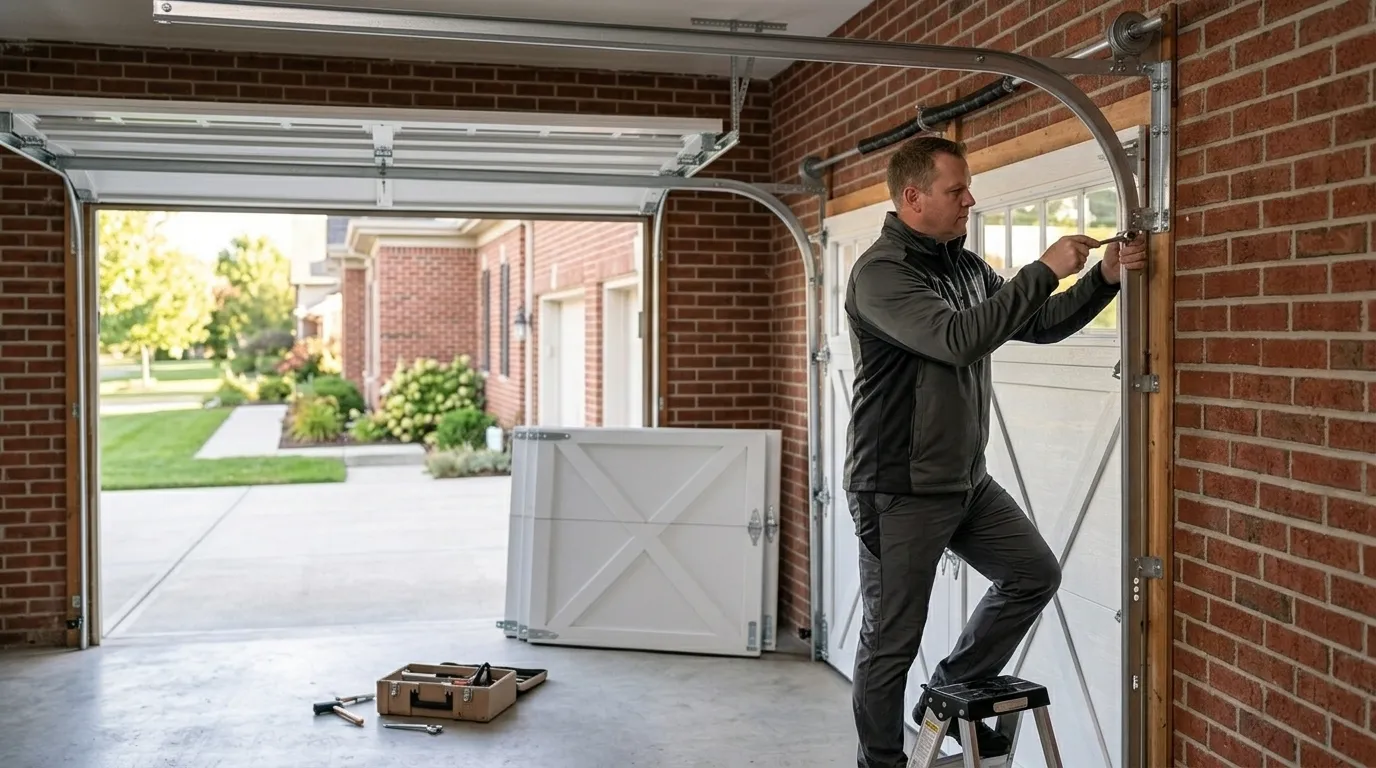
Rollers are one of the more DIY-friendly parts on a garage door, with a real caveat: the bottom rollers and anything on a door under spring tension are not a safe solo job if you don't know how to control a torsion spring. If you're only replacing the rollers on the lower brackets of a door that's already down and the opener is disconnected, most homeowners with basic hand tools can do it in an afternoon - loosen the bracket, slide the old roller out, seat the new one, retighten.
What trips people up is matching stem length and roller diameter to the track width, since Ocala-area houses from the 1982-1994 build years often used a narrower track than what's sold at most hardware stores today. Put in the wrong stem length and the roller binds in the bracket within a few weeks, and you're back where you started. We'll be honest: if your door has extension springs mounted overhead, or you're not sure which spring type you have, that's the point where we'd tell you to call rather than guess. A wrong move on a spring under load can break a hand.
A straightforward roller replacement on a standard double or single door usually means pulling anywhere from six to ten rollers, depending on door height, and checking the track for wear grooves where the old rollers rode. If we find the track itself has worn unevenly - common on the older steel-track setups still on a lot of 1980s and early-90s builds in this area - we'll flag it, because a new roller in a worn track just wears again faster. Nylon rollers with sealed bearings are the standard replacement now; they run quieter and don't develop the flat spots steel rollers get over years of use.
The honest limitation here: if the track brackets themselves are bent or the wall studs behind them have pulled loose, roller replacement won't fix the noise or the binding - that's a bracket and track repair, and we'll tell you that up front rather than sell you rollers that won't solve it. Most straightforward jobs are done same visit; a full track replacement on top of rollers takes longer and we'll walk you through that before starting.
Two things drive roller wear across this service area more than anything else: age of the housing stock and the climate band it sits in. With most homes built between 1982 and 1994 and the surrounding areas following the same 1980s-90s pattern, a large share of doors in the region are still running original or first-generation replacement rollers - steel, with unsealed bearings that were standard equipment at the time. Steel rollers don't fail from cold here; the region sits in a mild temperate band without the hard freeze-thaw cycling that cracks bearings up north. What they do get is steady, high-cycle wear from routine daily use over three-plus decades, plus humidity working into unsealed bearings and drying out the factory grease faster than a sealed nylon roller would lose it.
That combination - old hardware, warm humid air, decades of cycles - is why roller wear shows up as a slow rattle rather than a sudden break. It's wear, not weather damage, and it's why nylon roller upgrades hold up longer in this climate than another round of steel.
Most residential doors have between six and ten rollers depending on the number of panels and the door's height. Each panel usually carries two rollers, one per side, plus the ones on the bottom fixture. We count and match your specific door rather than assuming a standard number.
For houses built in the 1980s and 90s stock common across this service area, yes - nylon rollers with sealed bearings resist the humidity-driven grease breakdown that dries out old unsealed steel bearings. They also run quieter, which matters if the garage sits under a bedroom.
You can, but if one roller has failed from age, the others on the same door are usually close behind since they've had identical use. We'll inspect all of them and tell you honestly which ones still have life left rather than replacing parts that don't need it.
Sometimes, but not always. If the shake is from flat-spotted or loose rollers, yes. If it's from a worn track, a loose bracket, or an opener issue, roller replacement alone won't solve it, and we'll flag that during the inspection before doing any work.
By Neighborhood
We also handle roller replacement in these Ocala-area suburbs.
Call now or request a free quote - same-day service on most repairs, upfront written pricing.