Ocala, FL · Garage Door Service
Steel rollers on 1980s track are the usual failure in Silver Springs. We drive out from Ocala with nylon rollers sized for that era's hardware.
For Silver Springs calls we bring nylon rollers with sealed bearings in the stem lengths that fit 1980s and early-90s track - 4-inch and 7-inch stems mostly, since that's what went into houses built around here in the early-to-mid 80s. We carry both 10-ball and 13-ball bearing rollers because builders in that era mixed hardware weights depending on the door brand, and we don't know which one's on your track until we're standing in front of it.
What we don't carry on every run is oddball or import track hardware. If a door was retrofitted at some point with a track that isn't a standard 2-inch or 3-inch radius, we may need to order a roller to match rather than swap it same visit. That's rare, but it happens on houses that have had one door replaced without the whole track updated, and we'd rather tell you that up front than pretend every job is a straight swap.
We also carry the fasteners and hinge hardware that roller jobs usually turn into, since a roller rarely fails alone - the hinge it rides in is usually worn from the same 30-plus years of use.
On a door built when steel rollers on steel track were standard, the tell is noise before failure - a grinding or popping sound as the roller stem wears inside the hinge, followed by the door starting to bind or jump at the same spot on the track every time. If your house is one of the ones from the early-80s wave in this area, that's the pattern we expect to find, not a surprise.
Sometimes it shows up as the door catching partway up, or one side lagging the other so the panel racks slightly in the frame. That's usually a roller that's worn down enough on one track that it's riding on the flange instead of rolling in the channel. Left alone, it chews the track edge, and then you're paying for track straightening or replacement on top of the roller.
A door that's silent but slow to open is usually a spring or opener problem, not rollers - worth mentioning so you're not swapping the wrong part.
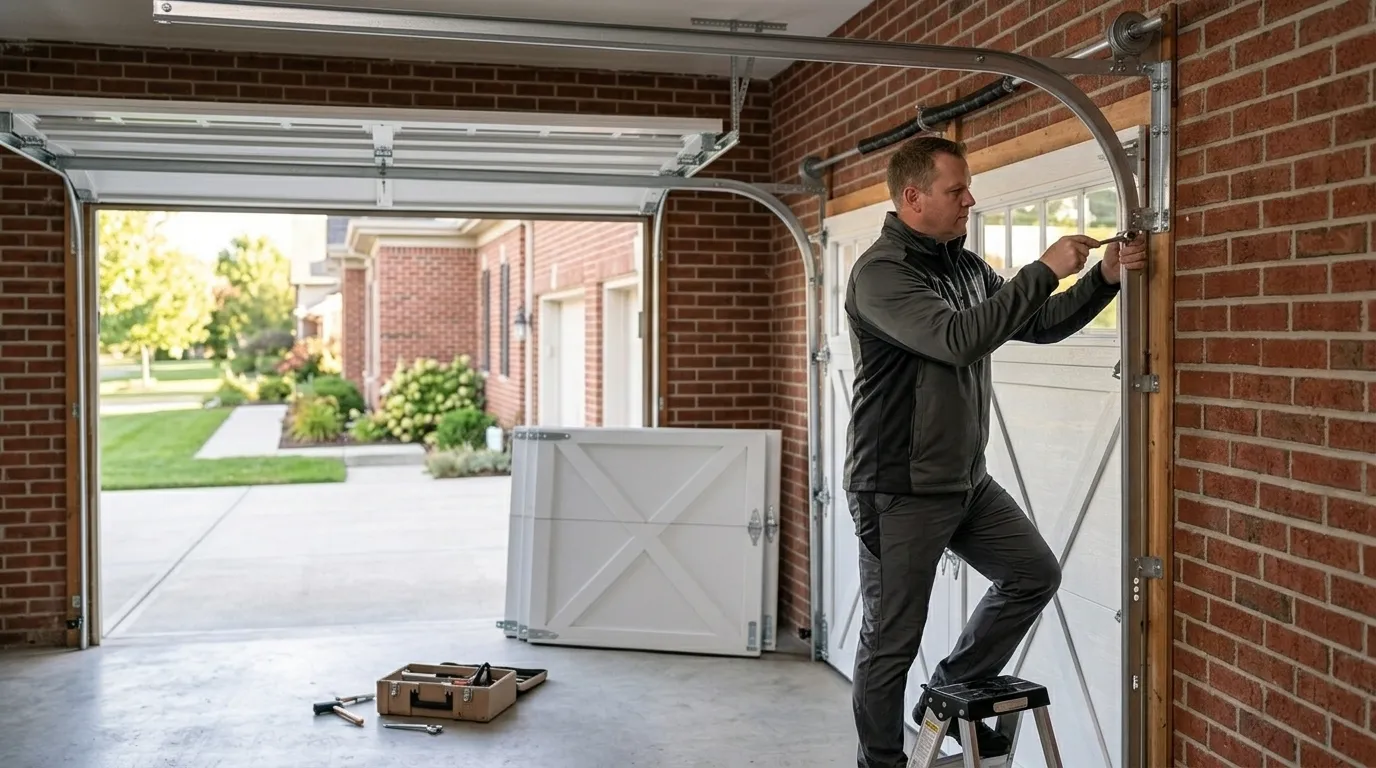
Straight roller swap on a standard double door usually runs under an hour once we're on site - remove the old rollers section by section with the door supported, seat the new ones, check the track alignment while it's open. If the track itself is bent or worn from years of a bad roller riding wrong, that adds time, since we're straightening or replacing track sections rather than just swapping parts.
On a door this age, we also check the hinges and center bracket while we're in there, since they've had the same three decades of wear as the rollers. Replacing rollers without checking those is a callback waiting to happen.
We won't sell you a full track replacement if straightening does the job - on a house this age the budget usually makes more sense going toward rollers and hinges now, spring service later, rather than one big invoice.
Most of the houses we're called to in Silver Springs went up right around 1984, and that generation of garage door came standard with steel rollers in steel hinges - no nylon, no sealed bearing, just metal on metal with grease that dried out years ago. Thirty-plus years of daily open-and-close cycles on that hardware is the single biggest reason we're out here for rollers rather than anything more dramatic.
The mild year-round climate in this part of Florida doesn't crack rollers the way a hard freeze-thaw cycle would elsewhere, so when we do find failure it's almost always wear, not weather damage. That's a small mercy - it means the fix is usually a straightforward swap rather than a full hardware overhaul.
We also see doors that have been run well past the point most people would replace a roller, because a five- or ten-dollar part doesn't feel urgent until the door won't move. That's not unique to any one household, but it's common enough here that we plan the truck stock around catching it before the track gets damaged.
That's almost always a worn roller on that side riding rough in the hinge or track, not a balance problem. On houses from the early-80s build wave, one side often wears faster if that track has a slightly tighter bend from age. We check both sides and the track alignment during the swap.
You can, but on a door this old the other rollers are the same age and wearing the same way. We'll tell you if the rest look fine, but replacing them all in one visit usually costs less overall than three separate call-outs over the next couple of years.
We stock the stem lengths and bearing types common to 1980s and early-90s doors, which covers most Silver Springs houses. If your track was replaced at some point with a nonstandard size, we may need to order that specific roller rather than swap it the same day.
If the panels, springs, and opener are sound, rollers are a small fix that solves the noise and binding on their own. Replacement only makes sense if the track is badly bent, the panels are damaged, or several systems are failing at once - we'll tell you honestly which situation you're in.
Call now or request a free quote - same-day service on most repairs, upfront written pricing.